
Liberia Moves to Establish First Local Government Training Institute
The Ministry of Local Government has begun formal steps to establish Liberia’s first Local Government Training Institute (LGTI), a permanent national institution intended to strengthen the professional capacity, accountability, and service-delivery performance of local government officials across the country.
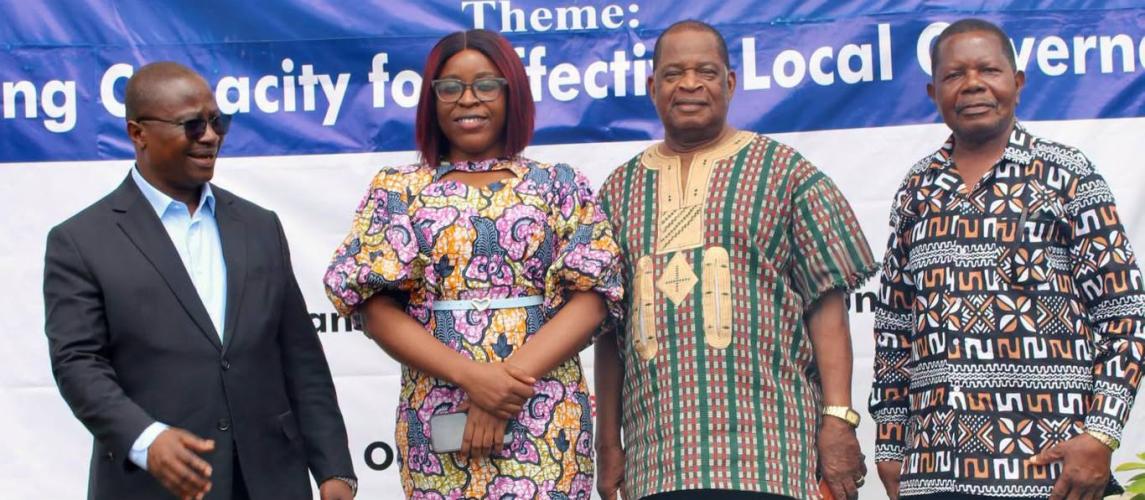
Deputy Minister for Local Government and Decentralization, Edward K. Mulbah, announced on Monday, October 12, 2026, during a curriculum-development ceremony held in Buchanan City, Grand Bassa County. He described the proposed institute as a strategic investment in Liberia’s decentralization process and a necessary foundation for sustainable local governance. He said Liberia requires a permanent institution to train local government officials and preserve institutional knowledge, rather than relying primarily on short-term, donor-supported training programs. He noted that the proposed LGTI would provide specialized training for mayors, superintendents, county council members, city inspectors, marriage registrars, and other local authorities.
The curriculum is expected to cover key areas of local administration, including budgeting, revenue collection, sanitation management, public financial management, and local governance. According to Deputy Minister Mulbah, improved training would help address persistent challenges in local administration, including inactive city authorities, weak revenue management, delays and alleged abuses in marriage registration, and limited public participation in town hall meetings. “A permanent training institution will help Liberia move away from short-term training activities and build a system that continuously develops the skills of local government officials,” Deputy Minister Mulbah said. He emphasized the importance of professional competence, accountability, and effective public service in local administration.
The proposed institute is also expected to introduce professional certification and diploma programs for local government workers. In addition, it will serve as a research hub to assess the performance of local authorities and generate evidence to inform policy decisions at national and county levels. The Ministry stated that the institute will promote inclusive governance by preparing local officials to engage women, young people, and persons with disabilities in decision-making processes. The initiative is expected to support the implementation of the Local Government Act of 2018 and contribute to the Government of Liberia’s ARREST Agenda for Inclusive Development.
Director of Training and Capacity Building at the Ministry of Local Government, Faith Nuwehli Siakor, outlined the immediate technical steps required to advance the project. She said the Technical Working Group must review and consolidate concept papers and draft documents developed since its establishment. Director Siakor further explained that the team will identify a temporary location where training activities can begin while preparations for a permanent facility continue. The Ministry is considering its existing relationship with the University of Liberia as part of efforts to secure an interim training site.
Plans are also underway to develop a formal partnership framework between the Ministry of Local Government and the University of Liberia. The framework will define the respective roles and responsibilities of both institutions in supporting the establishment and operation of the institute. The Technical Working Group is expected to prepare a consolidated report and implementation roadmap for submission to the Minister of Local Government. The report will outline the next steps required to move the initiative from the planning stage toward full operationalization.
If established as planned, the Local Government Training Institute is expected to enhance local authorities' capacity to manage public funds, collect revenue, engage communities, and deliver essential services. The initiative represents a significant step in Liberia’s efforts to strengthen local government institutions, promote accountable governance, and build the human-resource capacity required to advance decentralization nationwide.
